Drew Ludwig · 11 September 2026
Uncovering the Hidden Connections Between Dwell Time Metrics and Conversion Pathways in Content-Heavy Domains
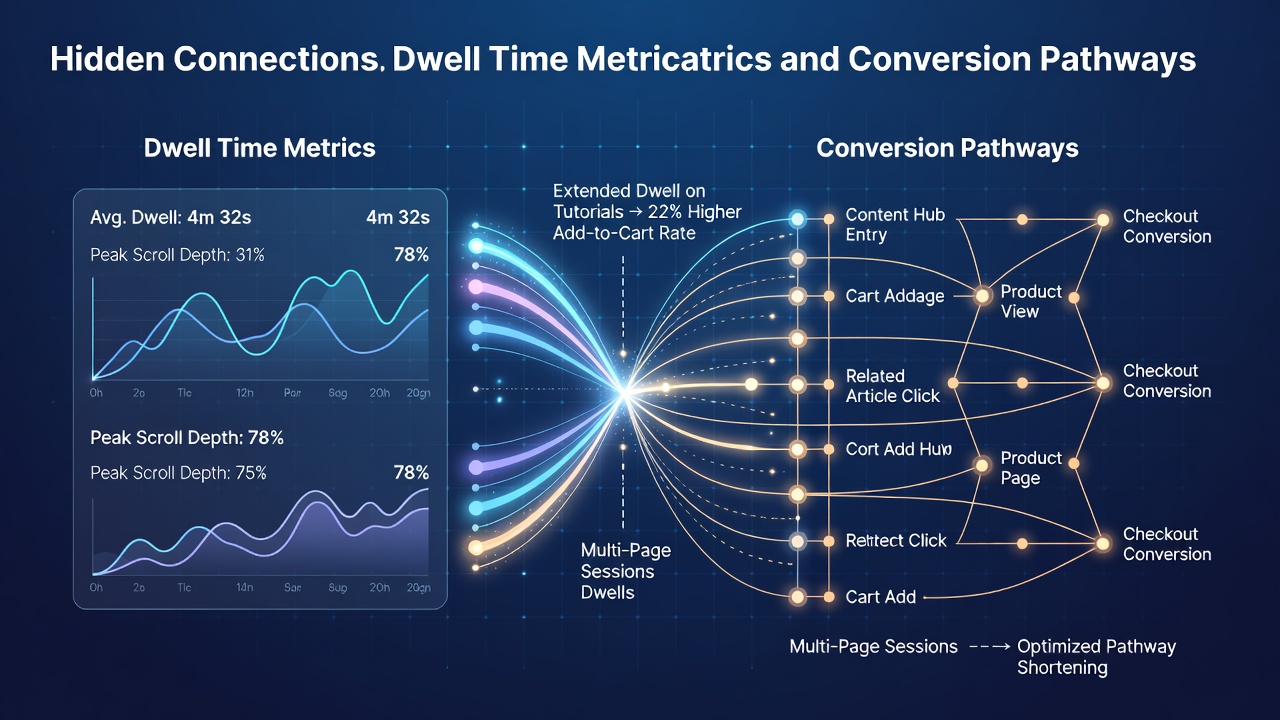
Content-heavy domains such as news portals, educational resource sites, and long-form blog networks generate substantial traffic yet face distinct challenges when tracking how users move from initial page views toward defined conversion actions like newsletter sign-ups or resource downloads. Dwell time, defined as the duration a visitor spends on a specific page before navigating away, serves as one measurable indicator within broader analytics frameworks, and researchers continue to examine its relationship to conversion pathways in these environments.
Defining Dwell Time in Context
Dwell time captures the interval between a user's arrival on a content page and their subsequent action, whether that involves scrolling deeper, clicking internal links, or exiting the site entirely. Analysts distinguish this metric from session duration because it isolates individual page interactions rather than aggregating across an entire visit. In content-heavy domains, where articles often exceed 1,500 words and incorporate multiple embedded elements, dwell time data accumulates rapidly and reveals patterns that shorter-form sites may not exhibit at the same scale.
Mapping Conversion Pathways
Conversion pathways represent the sequence of pages and interactions a user completes before reaching a goal event tracked in analytics platforms. These sequences typically include entry pages, intermediate content consumption steps, and final actions such as form submissions or product selections. Data from large-scale web analytics implementations shows that users in content-heavy environments frequently traverse five to eight intermediate pages before completing a conversion, with each step contributing variable dwell periods that influence the overall trajectory.
Examining the Connections Between Metrics
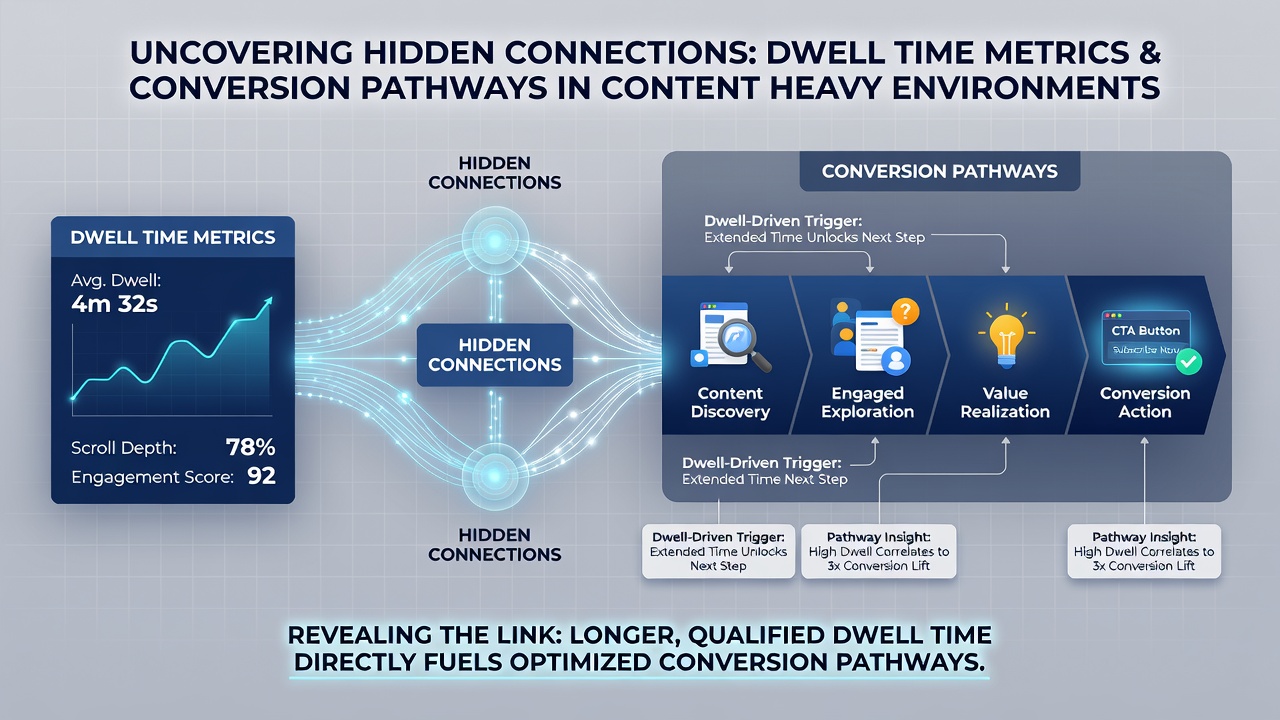
Studies conducted across multiple industry verticals indicate correlations between elevated dwell times on core content pages and increased likelihood of progression along conversion pathways. For instance, pages that retain visitors for periods exceeding two minutes often precede higher rates of secondary page views that lead directly to goal completions. Observers note that this pattern holds particularly in domains where informational depth drives user engagement before monetization or subscription steps occur.
Yet the relationship is not linear. Short dwell times on certain navigational or category pages can still funnel users effectively toward high-conversion landing areas, while prolonged dwell on low-value content sometimes correlates with higher exit rates. Researchers at academic institutions have applied path analysis techniques to large datasets and identified clusters where dwell time thresholds align with specific behavioral segments, such as readers who consume multiple related articles before subscribing.
Data Patterns Across Domains
Figures released by organizations tracking digital consumption reveal that content sites in the education and media sectors record average dwell times between 90 and 180 seconds on primary articles. These durations frequently precede conversion events when users encounter clear calls to action positioned after substantial content sections. Path modeling software applied to such datasets demonstrates that segments with dwell times in the upper quartile complete conversions at rates approximately 1.8 times higher than those in lower quartiles, though external factors like traffic source and device type introduce additional variance.
One analysis of European digital markets highlighted how regulatory changes around data collection in 2025 prompted platforms to refine dwell time tracking through first-party methods, yielding more precise pathway reconstructions. As preparations advance for the Digital Analytics Summit scheduled in September 2026, industry participants anticipate further standardization of these measurement approaches across content-heavy properties.
Methodologies for Uncovering Relationships
Analysts employ funnel visualization tools combined with cohort analysis to isolate dwell time influences on conversion sequences. Event tracking scripts capture scroll depth alongside time-on-page data, allowing segmentation of users who reach 75 percent scroll completion and exhibit dwell times above median values. Machine learning models trained on historical logs from major content networks have surfaced non-obvious predictors, including the timing of internal link clicks relative to dwell accumulation.
According to reports from the Pew Research Center, user behavior in news and informational domains shows consistent clustering around extended reading sessions that correlate with subsequent engagement actions. Complementary findings from the OECD digital economy indicators underscore regional variations in how dwell time data informs pathway optimization strategies.
Practical Considerations for Implementation
Content-heavy domains benefit from integrating dwell time data into existing conversion attribution models rather than treating it as an isolated signal. Tagging systems that assign weighted values based on time thresholds help prioritize content that sustains attention while identifying bottlenecks where users depart prematurely. Teams often iterate on page layouts by testing variations that adjust content density and interactive elements, monitoring resulting shifts in both dwell distributions and downstream conversion volumes.
Conclusion
The interplay between dwell time metrics and conversion pathways in content-heavy domains emerges through systematic analysis of user sequences and retention patterns. Organizations that align these measurements with pathway tracking gain clearer visibility into how content consumption precedes goal completion. Continued refinement of first-party data practices and analytical tooling supports more accurate mapping as platforms evolve through 2026 and beyond.