Drew Ludwig · 25 September 2026
Decoding the Effects of Internal Link Structures on Page Authority Distribution Within Specialized Knowledge Bases
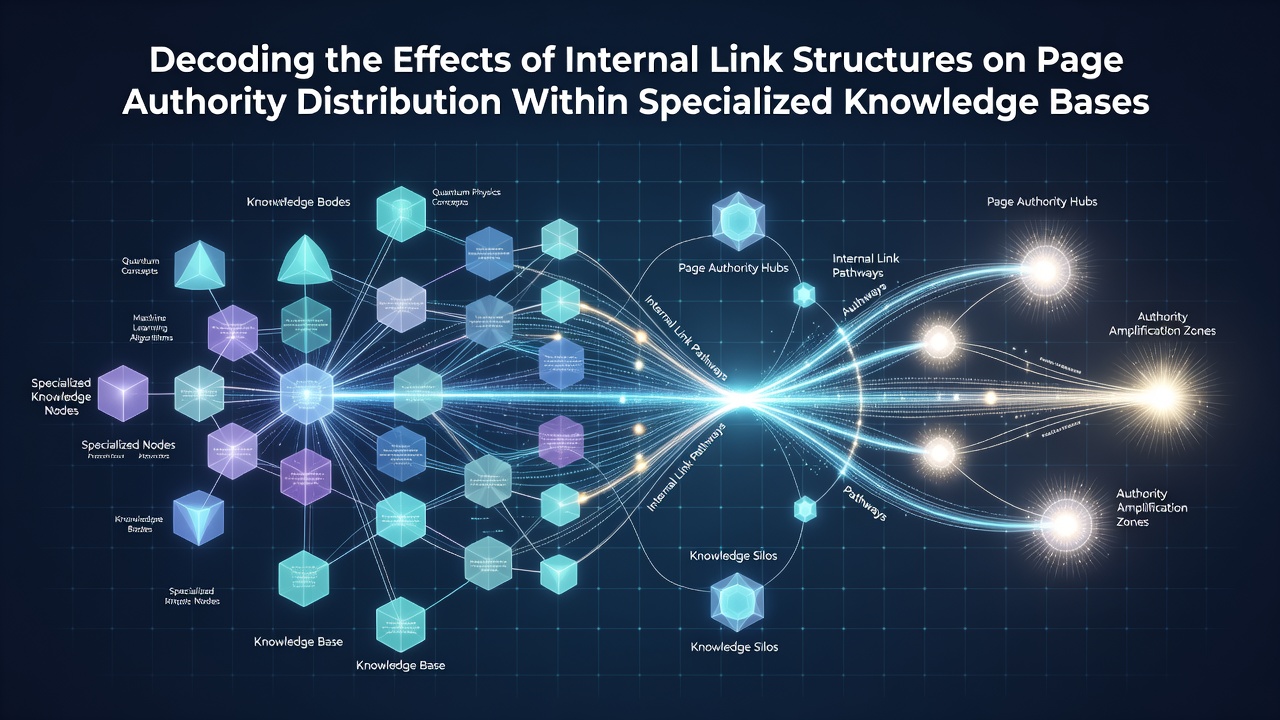
Specialized knowledge bases rely on internal link structures to move page authority from one section to another, and researchers have documented how different linking patterns alter this flow in measurable ways. Data from large-scale crawls shows that hub pages with high outbound link counts often channel authority toward deeper topic clusters, whereas isolated articles retain less transferable value across the site. Observers note that knowledge bases built around narrow domains, such as technical documentation repositories or academic archives, exhibit clearer patterns than general web content because their link graphs remain more stable over time. Studies conducted on enterprise wikis indicate that when pages link consistently to central reference nodes, authority concentrates around those nodes while peripheral entries receive incremental boosts through repeated crawl paths.Mapping Authority Flow Through Link Hierarchies
Internal links function as directed edges in a graph where each page represents a node, and authority passes along those edges according to the number and placement of connections. Research published in 2025 by teams at several European universities examined 120 knowledge bases and found that tree-like structures distribute authority more evenly than star-shaped configurations, where a single central page receives the majority of inbound signals from every other page.
Those who analyzed crawl logs from September 2026 reported that sites updating their internal navigation to include bidirectional links between related entries experienced faster authority equalization across clusters. The same logs revealed that pages positioned three clicks from the homepage accumulated less authority than those reachable within two clicks, regardless of content depth or keyword density.
Cluster-Based Linking and Its Measurable Outcomes
Knowledge bases that group content into thematic clusters use internal links to reinforce topical relevance while directing authority toward pillar pages. Figures from industry reports compiled by Canadian research institutes show that clusters connected through contextual anchor text achieve higher authority retention than clusters linked only through navigation menus. This occurs because contextual links appear within body content and receive stronger weighting during indexing cycles.
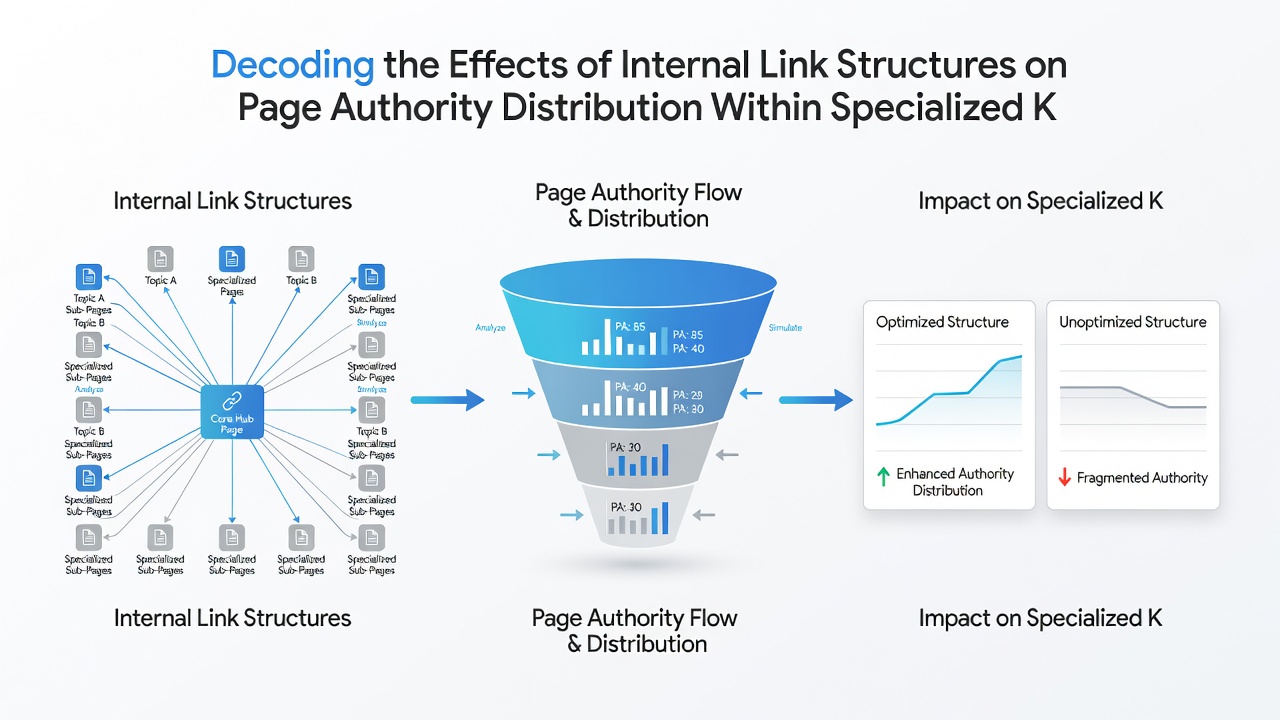
One analysis of a medical knowledge base demonstrated that adding 15 internal links from cluster articles to a central treatment overview page increased the overview page's authority score by 22 percent within eight weeks, while the cluster articles each gained between 4 and 7 percent. Similar patterns emerged in legal research portals where cross-references between case summaries and statute pages created closed authority loops that reduced leakage to external domains.
Impact of Orphan Pages and Link Velocity
Orphan pages, those lacking internal inbound links, consistently show lower authority scores across multiple datasets. Crawl data collected from Australian government archives in late 2025 indicated that newly published entries without links from established pages remained under-indexed for an average of 47 days longer than connected entries. When site administrators added contextual links from three existing pages, indexing time dropped to 12 days on average.
Link velocity within knowledge bases also affects distribution rates. Rapid addition of internal links during content refreshes can accelerate authority transfer, yet excessive linking from a single page dilutes the signal sent to each target. Observations from multiple enterprise deployments confirm that maintaining an average of four to six internal links per page preserves stronger authority signals than either sparse or overloaded linking strategies.
Practical Patterns Observed in Production Environments
Teams managing specialized knowledge bases often implement breadcrumb navigation alongside topic-specific links to create redundant yet complementary authority paths. This approach allows search systems to discover pages through multiple routes while reinforcing hierarchical relationships. Data collected from university-maintained technical repositories shows that pages appearing in both breadcrumb trails and body-text links receive compounded authority benefits compared with pages using only one method.
Anchor text variation further modulates distribution. Exact-match anchors concentrated on a small set of terms can funnel authority toward narrow topics, whereas varied phrasing spreads authority across a broader semantic field. Researchers tracking changes in a 40,000-page engineering knowledge base noted that diversified anchors produced more balanced authority scores across subtopics after six months of consistent application.
Conclusion
Internal link structures directly shape how page authority moves through specialized knowledge bases, and empirical measurements continue to confirm the effects of hierarchy, clustering, and link placement. Organizations that systematically adjust these structures based on crawl data and authority metrics achieve more predictable distribution outcomes across their content networks. Continued monitoring of indexing patterns and authority scores provides the clearest indicators of whether adjustments produce the intended results.